Ibogaine treatment centers for PTSD are clinics, almost all outside the United States, that give one supervised dose of the drug to people with post-traumatic stress disorder who have not improved with standard care. The best evidence so far is one open-label study of 30 U.S. special operations veterans with traumatic brain injuries, published in Nature Medicine in January 2024. Its results were large. It was also small, uncontrolled and short, and both facts matter before anyone books a flight.
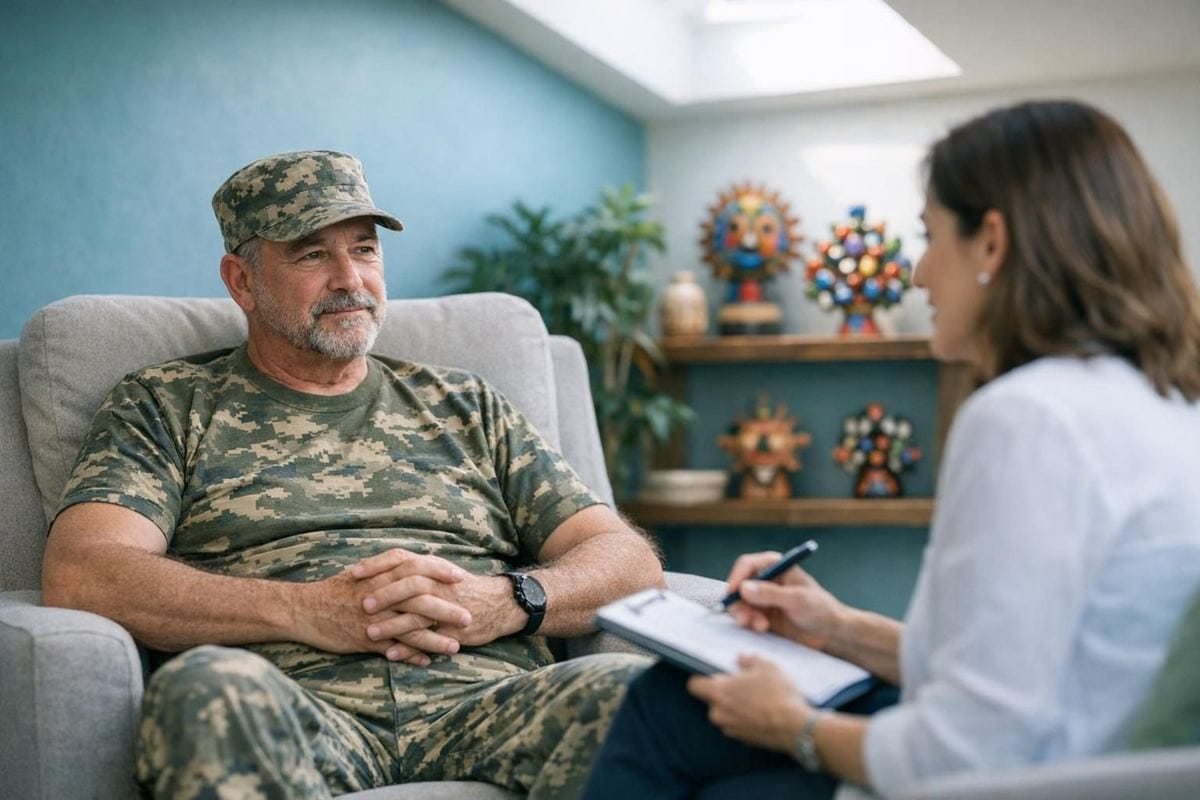
What the Stanford Veterans Study Measured
One month after a single dose, the 30 veterans reported far less trauma, depression and anxiety, and their disability scores fell from mild to moderate to none. The study, led by Kirsten Cherian and Nolan Williams at Stanford Medicine, used a protocol called MISTIC: oral ibogaine, a naturally occurring psychoactive compound from the root bark of the Tabernanthe iboga shrub of Gabon, given with intravenous magnesium to protect the heart. Dosing took place at a clinic in Mexico run by Ambio Life Sciences. Of the 30 men, 23 met criteria for post-traumatic stress, 14 for an anxiety disorder and 15 for alcohol use disorder.
| Measure | Scale used | Result at one month |
|---|---|---|
| PTSD symptoms | CAPS-5 | 88% average reduction |
| Depression | MADRS | 87% average reduction |
| Anxiety | HAM-A | 81% average reduction |
| Disability | WHODAS 2.0 | 30.2 at baseline to 5.1 |
The authors reported no unexpected or serious adverse events and no clinically meaningful QT prolongation. Every participant had brief ataxia and tremor; 12 were treated for headache and 7 for nausea. Figures come from the published paper and the Stanford Medicine release.
Why One Study Is Not a Success Rate
Nobody can quote a reliable success rate yet. The reason a one-month result cannot be read as a cure rate is the missing comparison arm: men who sought out a treatment, traveled abroad for it and expected it to work are the group in which expectation effects run strongest. The authors say so themselves and call for controlled trials.
- Sample: 30 men, all special operations veterans, mostly with mild brain injury. Women and civilians were not studied.
- Follow-up: one month. Durability past that point is unknown.
- Conflicts: three co-authors are shareholders in Ambio Life Sciences, the clinic that dosed the participants.
How Ibogaine Treatment for PTSD Differs From an Addiction Program
Most clinics built their protocols around drug addiction, mainly opiate, alcohol and cocaine addiction, and a trauma patient needs something different from the week. For opioid withdrawal, which a 2008 survey by Alper and colleagues found was the most common reason people took the drug, the therapeutic target is detox: interrupting withdrawal from heroin or methadone. For trauma, the value people describe sits in the dreamlike phase, when traumatic experiences resurface while the person feels detached from the fear. The course usually runs in three stages:
- Acute visionary phase (about 4 to 8 hours): dreamlike imagery and memory recall.
- Evaluative phase (about 8 to 20 hours): quieter introspection about what came up.
- Residual phase (24 to 72 hours): lingering stimulation and poor sleep while effects fade.
A facility run like a detox ward may discharge someone as soon as withdrawal settles. Trauma patients need the opposite: integration sessions with a therapist trained in trauma-informed care, group therapy, and an aftercare plan at home, ideally with a therapist already doing cognitive behavioral therapy with them. Ibogaine therapy without that follow-through leaves the hardest part of lasting recovery undone.
How Ibogaine Treatment Centers for PTSD Should Screen Trauma Patients
Trauma patients often arrive with co-occurring mental health conditions, so their screening covers three areas a general addiction treatment intake can miss. The full list of what a sound clinic does before, during and after the dose is in our guide to choosing an ibogaine clinic in Mexico; the points below are the trauma-specific ones.
Medications Ibogaine Treatment Centers for PTSD Ask You to Stop
In the Stanford study, Ambio told participants to stop all psychiatric medications, serotonergic drugs, CYP2D6 inhibitors, benzodiazepines, stimulants and beta blockers, among others, before dosing. That list overlaps almost entirely with standard trauma care. Sertraline and paroxetine, the two antidepressants FDA-approved for post-traumatic stress, are serotonergic, and paroxetine also blocks CYP2D6, the liver enzyme that converts ibogaine into noribogaine. Here is where screening logic gets misread: an ECG catches a long QT interval on the day, but it says nothing about what an antidepressant still in the blood will do once the drug is on board. Fluoxetine lingers for weeks. Any taper belongs to the prescribing doctor, planned well before travel.
Psychiatric History and Heart Health
The study excluded anyone with a history of psychosis, current suicide risk, or cardiovascular, liver or kidney problems. Expect the same questions at any careful clinic, plus a resting ECG and blood work. Stopping benzodiazepines or alcohol abruptly before a trip is its own danger, because withdrawal seizures appear among the risk factors in the published fatality cases.
Side Effects of Ibogaine and the Cardiac Risk
The serious risk is the heart. The drug can prolong the QT interval and trigger fatal arrhythmia, which is why the Stanford protocol added magnesium and continuous ECG monitoring. A 2012 forensic review by Alper and colleagues identified 19 deaths linked in time to ibogaine between 1990 and 2008; preexisting conditions, mainly cardiovascular, or other drug use explained or contributed to 12 of the 14 with adequate autopsy data. Lesser effects of ibogaine include nausea, headache, unsteady walking and poor sleep.
Legal Status and Where the Research Goes Next
Ibogaine is a Schedule I drug under the U.S. Controlled Substances Act, so no clinic can offer it legally in the United States; our explainer on why ibogaine is illegal in the US covers the history. Mexico does not schedule it, but COFEPRIS, the federal health regulator, has not approved it and issues no ibogaine-specific license, so standards vary by facility. The Stanford veterans were supported by VETS, Inc., a foundation that helps veterans reach psychedelic-assisted therapy; Stanford took no money from VETS or Ambio. In 2025 Texas passed SB 2308, committing $50 million to clinical trials that could support FDA approval.
If you are considering ibogaine, start with your own psychiatrist or primary care doctor: get an ECG, review every medication, and agree on a treatment plan for after you return. Then compare ibogaine treatment centers for PTSD on their trauma protocol and aftercare, not their detox record, using the best ibogaine centers in Mexico and the clinic standards on our About page as reference points. If you take an SSRI, a benzodiazepine or a heart medication, that conversation comes first.
Frequently Asked Questions About Ibogaine and Trauma
Can ibogaine be used to treat PTSD?
It is an experimental treatment for post-traumatic stress, not an approved one. The 2024 Stanford study found large symptom reductions one month after a single dose in 30 veterans with brain injuries, but it had no control group, so efficacy is not established.
Is ibogaine available in the US?
No. It is a Schedule I controlled substance, so it is available in the United States only inside approved research. Americans who pursue it travel to clinics abroad, including in Mexico and Canada.
How does ibogaine heal the brain?
The mechanism is not known. Ibogaine acts on several neurotransmitter systems, including serotonin and opioid receptors. A 2025 follow-up of the same veterans in Nature Mental Health linked better executive function to stronger theta brain waves, which the researchers presented as speculation, not proof.
How much does this therapy cost in Mexico?
Complete programs at Mexican clinics generally run from $5,000 to $12,000, depending on the facility, length of stay and level of medical supervision. Our breakdown of how much ibogaine treatment in Mexico costs explains what a quote includes.